
Is A Sustainability Degree Worth It? How It Can Shape Your Career
A sustainability degree gives students a way to turn care for people, communities, and the planet into practical, career-connected work.
When environmental knowledge is paired with business, data, policy, and technical skills, students build the kind of background employers value in roles focused on impact, problem-solving, and long-term change.
That foundation can lead in many directions, from corporate sustainability and environmental, social, and governance (ESG) reporting to environmental consulting, renewable energy, sustainable business, and community-based work. The courses students choose, the experiences they build, and the skills they develop help shape the sustainability degree jobs they are prepared to pursue after graduation.
This guide explores what students learn in a sustainability program, what they can do with a sustainability degree, how sustainability careers grow over time, and how to decide whether this path fits their goals.
Is a sustainability degree worth it compared with other majors?
A sustainability degree is worth it when it connects purpose with practical preparation. Students benefit most from programs that pair sustainability theory with applied work in data, policy, business strategy and hands-on problem-solving across real communities and industries.
Most sustainability programs cover environmental science, policy, ethics and systems thinking. That background is valuable, but employers often look for candidates who can apply it in practical ways, such as analyzing data, managing projects, communicating findings and understanding financial or operational trade-offs.
In practice, the strongest preparation often looks like this:
- Sustainability alone: This path helps students build a broad understanding of environmental challenges, policy, and systems thinking. With the right electives, research, internships and applied projects, students can connect that foundation to practical entry-level opportunities.
- Sustainability plus data or business skills: This combination helps students bring sustainability into decision-making. Applied skills in analysis, reporting, compliance, and consulting can prepare graduates for roles where organizations need to measure progress and act on environmental goals.
- Sustainability plus an adjacent major or track: Pairing sustainability with another field can help students shape a career around the kind of impact they want to make. Areas like engineering, finance, supply chain management, environmental science, and business can connect sustainability work to specific industries and systems.
Why companies hire sustainability professionals
Sustainability work is not only about corporate values. Organizations increasingly need people who can turn environmental goals into measurable action, whether that means improving operations, preparing for reporting needs, managing climate-related risks, or communicating progress to the people who need to understand it.
Regulations, investor expectations, customer demand, and operating costs all shape this work. Because those pressures can change over time, employers value professionals who understand both environmental issues and how organizations make decisions.
Many sustainability roles focus on turning environmental goals into practical organizational change. Professionals may support waste reduction, green building practices, procurement planning, or environmental performance tracking. That mix of knowledge and problem-solving can help them make an impact across business, public, nonprofit, and industry settings.
What students learn in a sustainability program
Sustainability programs sit at the intersection of environmental science, policy, economics, business, and community impact. The most career-relevant programs help students learn how to apply those ideas, not just study them in the abstract.
Students may learn to measure a company’s carbon footprint, evaluate sustainable energy systems, and understand environmental regulation. They may also study how organizations assess resource use, make the case for sustainability investments, and design community-based solutions. Compared with environmental science programs, which often focus more heavily on natural systems and research methods, sustainability programs usually emphasize how environmental decisions connect to organizations, communities, policy, and operations.
How students structure the degree matters as much as the major itself:
- Bachelor’s programs build a broad foundation for students entering the field. They give students time to explore different areas of sustainability before choosing the courses, projects, or career direction that best match their goals.
- Accelerated or integrated pathways can help students move from undergraduate study into graduate-level specialization with less disruption, being especially useful in a field where advanced credentials may support leadership roles.
- Master’s programs are often designed for professionals, career changers, or graduates who want deeper applied expertise in areas such as carbon management, environmental management, sustainability strategy, or sustainable business.
What can you do with a sustainability degree?
Sustainability graduates can work anywhere an organization needs to understand and improve its environmental impact. Early-career roles often focus on helping organizations measure progress, meet environmental requirements and improve the everyday practices that shape energy use, water use, waste and supply chains.
Common sustainability degree jobs include:
- Sustainability coordinator or sustainability specialist
- ESG or sustainability reporting analyst
- Environmental compliance coordinator
- Energy or resource management assistant
- Corporate social responsibility associate
- Sustainable supply chain analyst
- Climate or carbon accounting analyst
- Environmental consultant or project assistant
Because sustainability challenges show up across industries, the degree can support work in many settings. Graduates may help healthcare systems reduce waste, retailers evaluate supply chains, technology companies manage carbon reporting, or municipalities connect environmental planning with community priorities.
How sustainability careers grow over time
Salary and advancement vary by role, employer, location, and specialization, but sustainability roles can offer room to grow as professionals build experience and technical depth. For sustainability specialists, salaries commonly range from $46,230 to $147,830, with an average of $81,270.
What often changes the career trajectory is specialization. Sustainability coordinators and early-career professionals can move toward analyst, consultant, manager, or director roles as they build deeper expertise in areas like carbon accounting, ESG reporting, environmental compliance, renewable energy, sustainable supply chains, or data analysis.
The clearest path to stronger advancement usually comes from technical depth. The more specifically someone can help an organization solve a sustainability-related business problem, the more valuable that experience becomes over time.
How to decide if a sustainability degree is right for you
A sustainability degree is a strong fit for students who care about environmental and social impact and want to turn that commitment into practical work. It helps to connect sustainability to a clearer direction, whether that means shaping organizational strategy, supporting policy, improving environmental practices or strengthening communities.
This path may make sense if:
- You want to work in corporate sustainability, consulting, environmental policy, renewable energy, or community-based sustainability work.
- You plan to add coursework or experience in data, business, economics, policy, communications, science, or a technical field.
- You are interested in an accelerated sustainability degree or an integrated pathway that connects undergraduate study with graduate-level preparation.
- You want a degree that connects career preparation with impact, collaboration, and work that supports communities.
When another path may be a better fit
An adjacent major or academic focus may be a better starting point for students who want a more technical entry point, broader initial job options, or a career path centered on a specific field first. For example, students may want to connect sustainability to areas like business, public policy, or food systems, depending on the kind of work they hope to do.
The right choice depends on the work a student wants to do every day. Students drawn to design, analysis, systems change, communication, and cross-sector problem-solving may find that sustainability is the right home. Students who want a more narrowly technical role may be better served by beginning with that technical discipline and adding sustainability later.
Why study sustainability at Chatham University?
Chatham University’s Falk College of Environment, Leadership, & Management gives students a focused place to study environmental challenges through both academic and applied work. In the Bachelor of Sustainability, students can shape their path around areas like sustainable energy, natural resource management, sustainable business, or food systems, which helps connect the degree to clearer career goals.
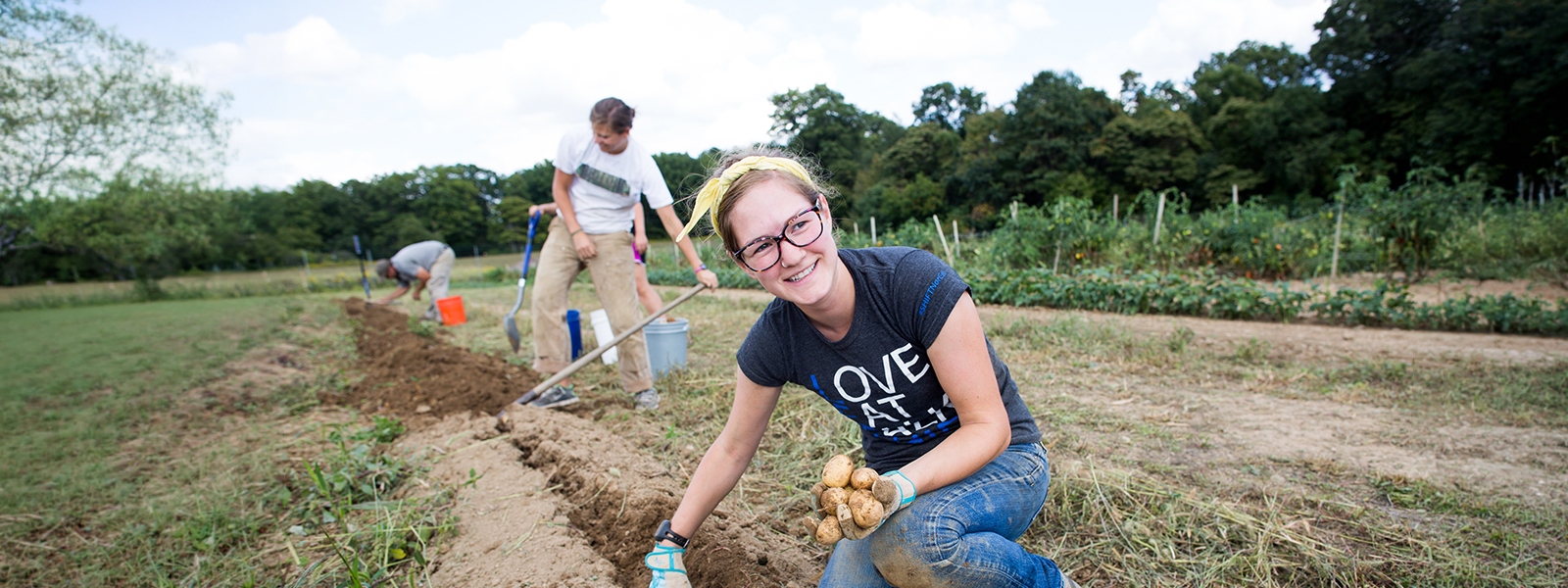
Students also learn in an environment where sustainability is part of daily campus life. At Eden Hall Farm, students use the campus itself as part of their education, connecting coursework and research to decisions about buildings, land, food, water, energy, and communities. That kind of hands-on experience can make the degree more practical and easier to translate into early career work.
The program is also shaped by Chatham’s connection to Pittsburgh. Students have access to internships, applied projects, and organizations working on sustainability issues across the region, helping them build experience before graduation. For students who want a sustainability degree rooted in purpose, practice, and career preparation, Chatham offers a path that connects what they study with the impact they want to make.
Explore sustainability programs at Chatham University
For students who want to turn care for people and the planet into action, Chatham offers a supportive, career-connected place to begin. The Chatham University Bachelor of Sustainability helps students build knowledge in environmental systems, applied problem-solving, and the business and community contexts that shape sustainability work.
Students who want to keep building expertise can also explore graduate options in sustainability, environmental management, and sustainability and business.
If sustainability feels like the future you want to help shape, Chatham can help you build the skills, experience, and community to lead what’s next.
FAQs: Questions to ask before choosing a sustainability degree
Do you need a graduate degree to work in sustainability?
Not always. Many entry-level sustainability roles are open to bachelor’s degree graduates, especially when they have internships, applied projects, or skills in data, business, policy, or communications. Graduate study can be helpful for students who want to move into specialized or leadership-focused roles.
What skills make a sustainability degree more valuable?
A sustainability degree becomes more career-connected when students build skills in data analysis, project coordination, communication, policy, business, and environmental reporting. These skills help graduates move from understanding sustainability issues to helping organizations act on them.
Is sustainability more science-based or business-focused?
It can be both. Some sustainability paths focus more on environmental systems, land use, energy, or natural resources, while others focus on business strategy, reporting, operations, and supply chains. The best fit depends on the kind of work a student wants to do after graduation.
Does Chatham offer graduate pathways in sustainability?
Yes. Chatham offers graduate study options in sustainability, environmental management, and business for students who want to keep building expertise after undergraduate study. These pathways can support students interested in deeper preparation for management, consulting, or leadership-focused work.