
What Can You Do With a Bachelor of Biology Degree?
If you are drawn to how living things work, a biology degree can feel like a natural fit. What can be less obvious is where that curiosity leads once you graduate, especially when the most visible path seems to run straight to medical school. Sorting out the fuller picture makes it easier to commit with confidence.
The good news is that a biology degree points toward far more than one destination. Understanding where it leads helps match an education to work that genuinely fits, whether that means laboratory research, healthcare, environmental science, or something further afield. Programs like Chatham University's biology degree are built around that connection between what students study and where it can take them.
The paths ahead range from roles graduates can step into right away to careers that build on additional training over time. Seeing how those options fit together makes the decision feel less like a leap and more like a direction.
What a biology degree prepares graduates for
A biology degree prepares graduates for entry-level roles in laboratory research, healthcare, environmental science, biotechnology, and education. It also serves as a common first step toward medical, dental, pharmacy, or graduate school. This breadth is built in on purpose, which is why the same foundation can lead in so many directions.
At its core, biology is the study of living things, from single cells to whole ecosystems. The degree teaches how those systems work and why they behave as they do. A scientific grounding like this matters, but the skills built alongside it matter just as much. Studying biology develops lab technique, the ability to read and analyze data, and a habit of solving problems with evidence rather than guesswork.
Those skills travel well, and that is where the real value shows up. The same discipline that carries a student through an experiment also translates into a hospital, a research lab, or a company developing new medicines. Because the degree is broad by design, what it becomes depends largely on the direction a graduate chooses to point it.
Career paths a biology degree can open
Biology connects to work across several fields, and each one draws on the science in a slightly different way. Some roles reward hands-on lab skills, while others lean on communication, fieldwork, or an understanding of how living systems affect people and the environment. The paths below show how that foundation takes shape in practice.
- Healthcare and clinical roles: These positions sit close to patient care or medical testing. A medical technologist runs the lab tests doctors rely on to diagnose illness, while a clinical research coordinator helps manage medical studies from behind the scenes.
- Laboratory and research: These hands-on science roles exist in labs at universities, hospitals, and companies. A biological technician or research assistant carries out experiments and records results, and both are common entry points for recent graduates.
- Environmental and conservation: This work protects natural resources and wildlife. An environmental technician might test water or soil samples, while conservation roles focus on caring for habitats and the species that depend on them.
- Biotechnology and industry: Biotechnology puts living systems to work making products like medicines. Roles here support drug development, manufacturing, and the safety checks that keep those products reliable.
- Education and science communication: For graduates who enjoy explaining science, options include teaching with proper certification, leading community programs, or writing about research for a wider audience.
Several of these roles are open the moment a graduate finishes their degree, while advanced clinical and research positions usually ask for further study first. Knowing which is which helps set realistic expectations early.
Which biology careers pay the most
The highest-earning biology careers tend to concentrate in healthcare, in roles such as physicians, physician assistants, dentists, pharmacists, and biochemists. The Bureau of Labor Statistics reports that graduates with a biology background most often work in healthcare occupations. Within that field, roles such as physicians rank among the best-compensated destinations for the degree.
Most of these top-earning roles call for a graduate or professional degree, so the bachelor's works as the entry point rather than the finish line, and that is the point where its real value shows up. A strong undergraduate degree builds exactly the foundation those advanced programs look for when they evaluate applicants, which makes it the groundwork for everything that follows.
Compensation generally rises alongside credential level and the degree of specialization involved. Even so, several solid-paying positions in biotechnology and environmental science remain within reach for graduates who pair a bachelor's degree with a few years of hands-on experience.
Transferable skills a biology degree builds
The assumption that biology is mainly for aspiring doctors is worth setting aside. Medical school is one strong route, but the degree travels much further than the clinic, and often further than the lab. What carries into all of that work is a way of thinking that transfers in ways students rarely predict:
- Evidence-based reasoning: The habit of asking how a system behaves and weighing what the data actually says holds up well outside science, from untangling a business problem to weighing a policy tradeoff.
- Clear explanation of complex ideas: Graduates learn to make a dense finding understandable, so people who are not scientists can act on it with confidence.
- Unexpected directions: Employers in fields with no obvious tie to biology still value that clarity of thinking, which is why graduates often land in roles they never pictured for themselves.
Adaptability like this is the quiet strength of the degree. For many students, the most rewarding direction turns out to be one they discovered along the way rather than the one they named on day one.
How to decide if a biology degree is worth it
Whether a biology degree is worth it comes down to what you want from your career. It suits people who enjoy hands-on science, like working through analytical problems, and want work that has a real effect on others. Weighing a few honest factors early makes the decision clearer.
- Your interests: If living systems and evidence-based problem-solving genuinely engage you, the degree tends to stay rewarding across many kinds of work.
- Your long-term plans: Many higher-earning roles are reached through graduate study, so advanced degrees are a natural next step rather than a barrier. Deciding early whether that appeals to you helps you plan a smoother path.
- Program fit: The right foundation makes advanced study or direct entry into the workforce feel achievable, so it helps to explore undergraduate programs that support the direction you have in mind.
- Return on investment: A degree delivers more when it connects clearly to careers, keeps costs manageable, and builds real experience along the way.
Seen this way, a biology degree rewards students who think ahead about where they want it to lead. The clearer that vision, the more the degree works in your favor.
Build your biology career at Chatham University
Choosing a biology program comes down to where you want your science to lead. Chatham University's Bachelor of Science and Bachelor of Arts in Biology give you strong fundamentals and room to point the degree toward the career or graduate program you have in mind.
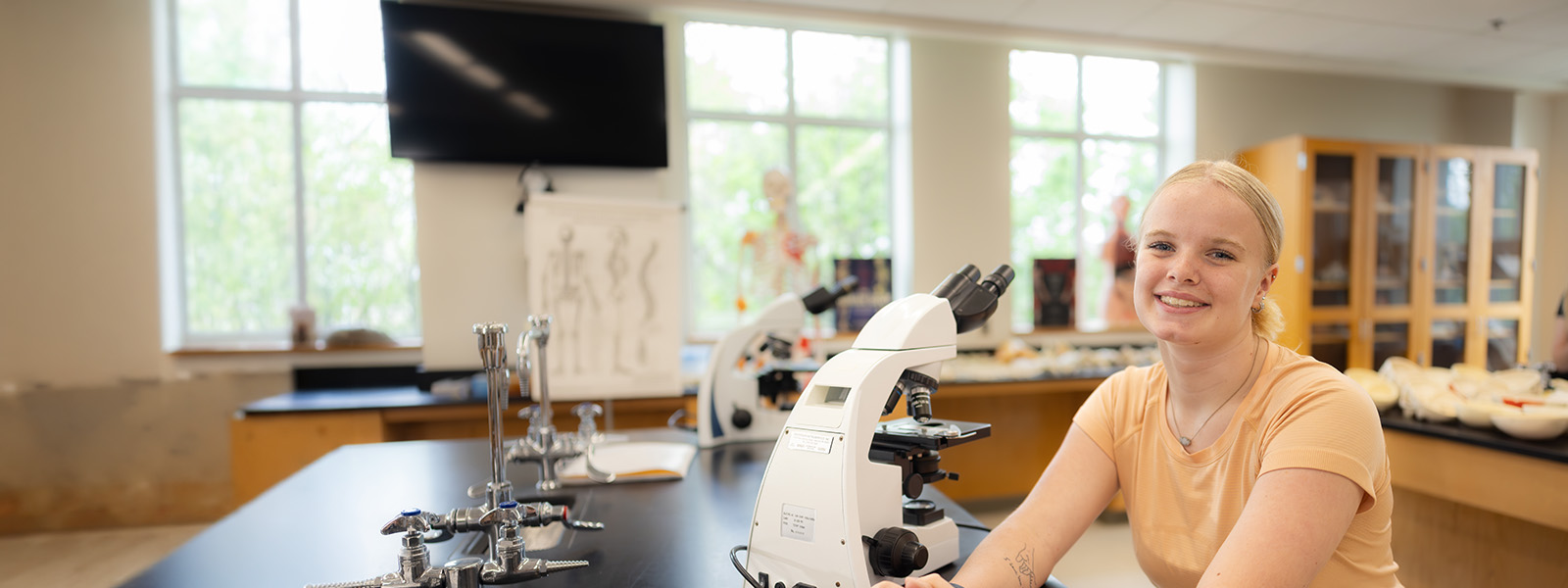
A cell and molecular biology track or a human biology track gives your studies a clear focus, and that focus becomes hands-on experience in the Buhl Science Complex and a human cadaver lab. If your plans reach past the bachelor's, integrated pathways let you begin a master's degree, such as the Master of Physician Assistant Studies, before you have finished your undergraduate work.
Being in Pittsburgh adds to that. With employers like UPMC and the University of Pittsburgh nearby, coursework can lead into internships and the professional connections that come with them.
If understanding living systems is the work you want to build a future around, Chatham University gives you the fundamentals, hands-on experience, and support to pursue it. Take a closer look at the biology program, and connect with Pre-Health Advising to talk through the path that suits your goals.
FAQs about biology degree careers
Do you need a master's degree to work in biology?
Many entry-level lab, environmental, and technician roles hire graduates with a bachelor's degree, while clinical and advanced research positions usually call for graduate study.
Is a BA or a BS in biology better?
A bachelor of science leans heavily on lab and science courses, which suits medical school or research preparation, and a bachelor of arts pairs biology with broader coursework that fits paths in policy, education, and business.
How long does a bachelor's degree in biology take?
Most take about four years of full-time study, though integrated pathways can let some students begin graduate work sooner.