Engineering (Dual-Degree)
Have questions? We make it easy to get in touch:
Or, answer a few questions and we will be glad to help.
Loading...
Engineering (Dual-Degree) Overview
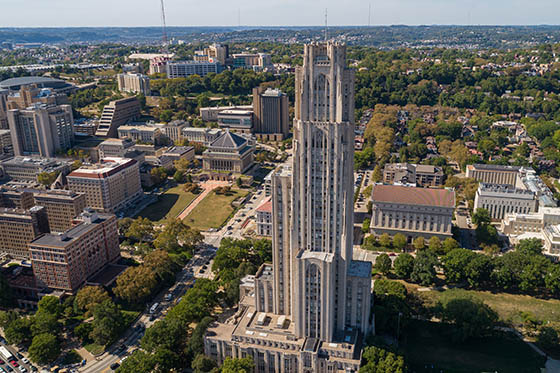
Chatham University offers an Engineering Dual-Degree program that gives students the best of both worlds—a Chatham education on a close-knit campus with engaged faculty mentors and admission to the Swanson School of Engineering at the University of Pittsburgh.
In approximately five years, students will earn two bachelor's degrees: one from Chatham and one from Pitt. Graduates will gain a significant competitive edge in the workforce by acquiring not just one, but two highly sought-after degrees. Chatham studies may focus on our distinguished programs in Chemistry, Mathematics, or others.
Save Money and Time
Earn Two Degrees
Save money and earn two degrees in less time: qualified students are granted admission to Pitt's Swanson School of Engineering.
Wide-Ranging Resources
Best of Both Universities
Experience the unique benefits of a world-class liberal arts education at Chatham, combined with a specialized engineering curriculum from Pitt.
Experienced Professors
Mentored By Expert Faculty
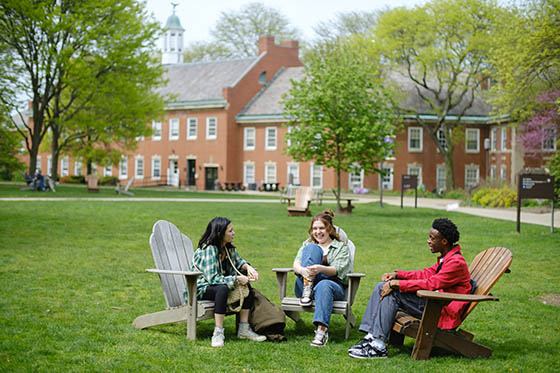
Students benefit from the intimate community at Chatham, with ample research and mentorship opportunities with faculty members.
Plan For Your Future
Career-Ready Graduates
Our program equips students for careers in various engineering disciplines, including bioengineering, chemical, mechanical, civil, environmental, and more.
I am so proud of this unique program. Students get a wonderful transition to college with special one-on-one attention from their professors at Chatham University, where they learn how to think mathematically and scientifically. Then they transition to the University of Pittsburgh, where they have a plethora of engineering fields to become experts in. It’s the best of both worlds!
—MICHELLE DOYLE, Associate Professor
First Degree, Chatham University
The Engineering (Dual-Degree) program is most suited to Chemistry and Mathematics majors, but students pursuing any major may join, provided they have been enrolled at Chatham for at least two years, have a cumulative GPA of 3.0 or higher (3.5 or higher for Bioengineering), and have completed Pitt Engineering prerequisite courses. Approximately the first three years will be spent at Chatham, though additional time may be required to complete all degree requirements and engineering prerequisites.
Second Degree, University of Pittsburgh
Students will apply to Pitt’s Engineering program early in their last year at Chatham. The Swanson School of Engineering and Chatham have mapped curricula for Chatham students to pursue engineering degrees in the following majors at the University of Pittsburgh: Bioengineering (BS), Chemical Engineering (BS), Civil Engineering (BS), Environmental Engineering (BS), and Mechanical Engineering (BS). Students will complete these courses in approximately two years, though additional time may be required to complete all degree requirements.
Career Opportunities
Graduating in approximately five years with two bachelor's degrees offers a significant competitive advantage in the job market. By earning a bachelor's degree in Chemistry, Mathematics, or other programs alongside a Bachelor's of Engineering, you will be uniquely qualified for a variety of roles across different engineering disciplines, including architectural, bioengineering, chemical, civil, electrical, environmental, industrial, mechanical, and more.
Tuition & Financial Aid
During their time at Chatham, students will collaborate with the Chatham Office of Financial Aid for grants, loans, and scholarships. In their time at Pitt, students will work with Pitt’s Office of Financial Aid. Requesting the Chatham degree before the Pitt degree may affect eligibility for some federal aid, such as Pell Grants. It is strongly recommended that students consult with both universities' financial aid offices to understand their options.
The Buhl Science Complex
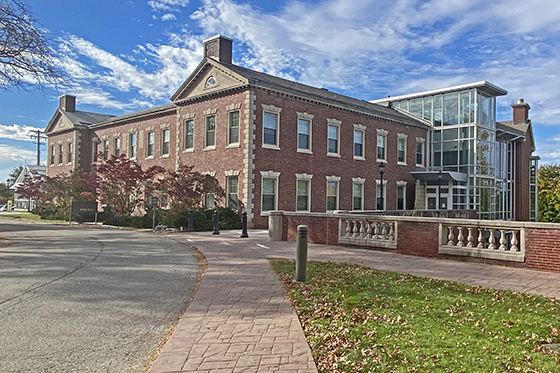
The Buhl Science Complex is Chatham’s 10,000 square-foot laboratory building, which features a three-story glass atrium and a modern greenhouse in addition to individual, specialized research spaces; laboratories and classrooms; a range of modern analytical equipment including cell and tissue culture facilities, fluorescence microscope, spectrometers (nuclear magnetic resonance, UV-VIS, IR), and one of the few drift tube mass spectrometers in the country.
Fieldwork on Eden Hall Farm
Chatham science students enjoy ready access to outdoor areas for fieldwork, including Chatham's 388-acre Eden Hall Farm—the world’s first academic community built for the study of sustainability, with its woodlands, streams, and research labs.
Explore Eden Hall : Checkerboard 7 - Fieldwork on Eden Hall Farm